.png)


Otto Yulievich Schmidt - Hero of the Soviet Union, an outstanding polar explorer, academician.
Born in Mogilev, graduated from the Kyiv Institute.
C 1929, head of many Arctic expeditions, organizer and first head of the Main Directorate of the Northern Sea Route. To study the Earth as a planet, he created an institute - the Institute of Theoretical Geophysics of the USSR Academy of Sciences and became its first rector

The surname Schmidt, translated from German and some other languages as Kuznetsov, was worn by many famous people - scientists and writers, athletes and military leaders. The most famous in Russia are two Schmidts - a rebellious Black Sea lieutenant, who became aIlya Ilf and Evgenia Petrova character of tales and jokes, and "red Columbusnamed Otto. The polar explorer combined the talents of mathematics and geophysics with organizational talent and had the appearance Santa Claus.

Schmidt admitted that two people lived in him - science and action: the socio-economic changes taking place in Russia satisfied the second hypostasis of Otto more than the first. During the First World War, the scientist came to the Kyiv mayor's office and offered to cope with hunger by introducing a food distribution rationing system he had developed.
After the victory of the October Revolution, Schmidt joined the Bolshevik Party, moved to Petrograd, and then to Moscow. Soon the scientist became a member of the Commissariat for Food, participated in the formation of food detachments. In January 1919, on behalf of Vladimir Lenin, Otto Yulievich drew up a draft Decree on consumer communes. The future polar explorer also worked in the People's Commissariat of Education - he improved the vocational training of workers.
In Otto Schmidt lived the Jules Verne spirit of campaigns. While being treated in Germany, the scientist "fell ill" with mountaineering and in 1928 organized an expedition to the Pamirs, which resulted in the establishment of the nature and true size of the Fedchenko glacier. When conquering mountain peaks, Schmidt showed an unusual ability for a scientist to lead people in emergency circumstances, which was useful in sea voyages in the Arctic.

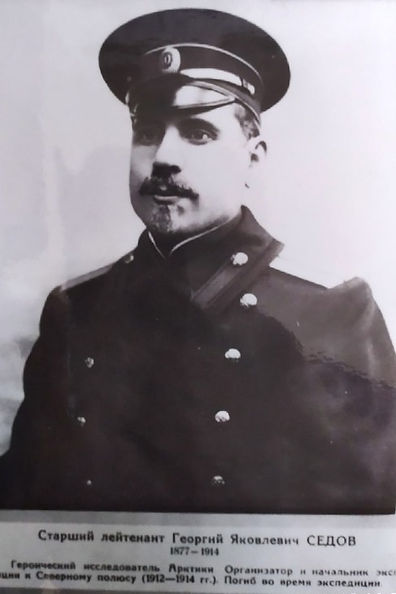
The beginning of the Arctic epic of Otto Yulievich was laid by 2 voyages on the icebreaker Sedov. The mission of the first - "scientific-diplomatic" - campaign was to confirm the sovereignty of the young Soviet country over Franz Josef Land. The achievements of the expedition were the hoisting of the hammer and sickle flag on Hooker Island and the record of penetration into the northern latitudes by an icebreaker. At the end of the second northern campaign of Otto Yulievich, the fact of the existence of Vize Island, discovered, like the planet Neptune, by mathematical calculations, was confirmed, and an island named after Schmidt was discovered.
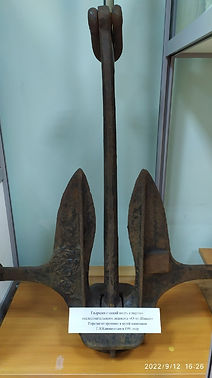
In 1932, the scientist, who had recently headed the Research Institute of the Arctic, set sail on the icebreaking steamer Alexander Sibiryakov in order to prove the possibility of overcoming the Northern Sea Route in one navigation. On the 14th day, the participants of the campaign, which started in Arkhangelsk, hugged on Severnaya Zemlya with polar explorers left there 2 years ago during the second Schmidt Arctic expedition.

Since the strait between Bolshevik Island and the Taimyr Peninsula was filled with ice, the travelers decided to bypass the archipelago from the North, which until then no ship had been able to do. On September 10, 200 km from the Bering Strait, the ice broke the propeller of the icebreaker, and the Sibiryakov stopped. To raise the stern and repair the damage, the ship's crew dragged 400 tons of coal into the bow of the ship. After the repair, the fuel reserves were returned to the stern, and the Sibiryakov continued sailing.
Then a second accident followed. The seafarers, who raised home-made sails over the icebreaker, pulled the ship up with cables, blew up the hummocks using ammonal. At the beginning of the second autumn month of 1932, the “Sibiryakites” reached Cape Dezhnev and saluted the victory over nature and circumstances. Soon Otto Schmidt became the official head of the Soviet polar explorers.
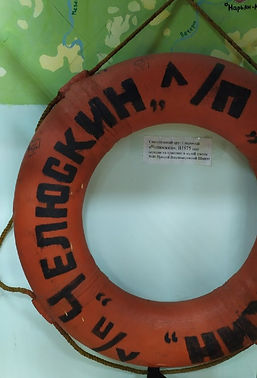
In the summer of next year, the famous Arctic epic of the scientist started - sailing on the Chelyuskin steamer, which is an English playwright Bernard Show dubbed it a tragedy, miraculously turned into a Soviet triumph. The cargo-passenger ship, assembled at Danish shipyards, was not adapted for sailing in the Arctic latitudes.
On September 23, ice blocked the ship just at the site of last year's Sibiryakov accident. This was followed by an almost 5-month drift, and on February 13, the ice floes crushed the steamer, and the Chelyuskin sank. During the evacuation, the caretaker died, whose last name came from the name of Schmidt's hometown.
The remaining 104 people, including 10 women and two children, spent 2 months on the ice floe and were evacuated in over 20 rescue flights. Schmidt supported the spirit of his comrades and even read scientific lectures in the tent. Otto Yulievich was going to be the last to be evacuated to the mainland, but fell ill with severe pneumonia, and at the insistence of the Soviet government, the scientist was evacuated to a hospital in Alaska on April 11.
Moscow welcomed the "Chelyuskinites" as winners. Numerous photographs capture the jubilation of Muscovites welcoming Arctic sailors. The rescue pilots became the first Heroes of the Soviet Union, and the adult members of the expedition received orders.
In 1937, a plane with Otto Schmidt and other polar explorers on board reached the North Pole, and a Soviet station with that name was organized not far from the "crown" of the Earth. The head of the world's first drifting station was Ivan Papanin, who subsequently removed Schmidt from the post of head of the Glavsevmorput.